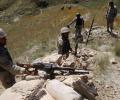
Pakistan has handed over evidence-based demands to mediators in Istanbul talks with the Afghan Taliban, aiming to end cross-border terrorism. The talks follow recent border clashes and aim to defuse tensions between the two sides.

Pakistan and the Afghan Taliban have resumed peace talks in Istanbul, aiming to address cross-border terrorism and prevent further escalation. The talks follow recent clashes and a temporary ceasefire, with Pakistan demanding that Afghan soil not be used for terrorism.
Pakistan and Afghanistan have agreed to an immediate ceasefire and setting up of 'mechanisms' to ensure lasting peace after days of violent clashes along the border that left several soldiers, civilians, and terrorists dead on both sides, officials said on Sunday.

For India, much is at stake: Crucial energy supplies traversing the Strait of Hormuz, the fate of its 10 million citizens living and working in West Asia -- who send generous remittances home -- and its major trade links with the region.

Uncertainty surrounds the planned second round of peace talks between the US and Iran in Islamabad, as both sides engage in brinkmanship. Despite Pakistan's security preparations, Iran has yet to confirm its attendance, citing a lack of seriousness from the US in pursuing diplomacy and violations of the ceasefire.

...reopen for up to six months. Until then, the Strait stays nearly closed. The world pays. And no one, including the man who started this, can say when it ends, notes Prem Panicker in his must read blog on the Iran War.

The clock on the ceasefire is running out. But everyone's already whispering about round two, possibly as soon as this weekend.
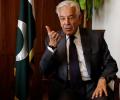
Pakistan's Defence Minister Khawaja Asif has warned that Islamabad will enter into an 'open war' with Kabul if the ongoing peace talks in Istanbul fail, TOLO News reported.

Saudi Arabia and the UAE are actively pushing Trump to take the war to its bitter finish and 'erase' Iran's presence in the geopolitics of the region. Simply put, the two most powerful Sunni Arab oligarchies are on the same page as Israel. Such interference increases the risk of a breakdown in dialogue between the US and Iran, points out Ambassador M K Bhadrakumar.

The core issues to be settled -- access to Hormuz, Israel's aggression in Lebanon, the question of Iran's nuclear programme, sanctions relief and compensation -- are thorny enough to require weeks of patient negotiation. The most likely outcome of the opening sessions is that both sides take the measure of each other, establish what is and is not negotiable, and return home without having broken anything. That would count as progress.

The United States, which entered this war in expectation of a short, sharp win along the Venezuela model, is now preparing for deeper involvement in a conflict it does not fully control, without the allies it typically relies on, against an adversary that is not behaving as expected, in a global environment that is already absorbing economic shock. Prem Panicker continues his must read daily blog on the Gulf War.

'Was the five-day pause ever meant to hold, or was it simply another instrument of signaling, of positioning, of buying time in a war where even the pauses are tactical?' asks Prem Panicker in his must read daily blog on the Gulf War.

Dar recalled that when he met US Secretary of State Marco Rubio in July and asked about dialogue with India, the top US diplomat clarified that India has maintained it is a "bilateral issue."
Pakistan's Defence Minister Khawaja Asif issued a strong warning to the Afghan Taliban following the collapse of peace talks, threatening military action in response to any future terror attacks originating from Afghanistan.

Pakistan launched fresh air strikes targeting terrorist hideouts in Afghanistan, killing several people, including three cricketers, casting a shadow over the expected talks in Doha amid a fragile ceasefire that had temporarily halted hostilities between the two sides.

US President Donald Trump met with Pakistan Prime Minister Shehbaz Sharif and Field Marshal Asim Munir at the White House to discuss bilateral ties. This was the first formal bilateral interaction between Trump and Sharif.

Or will he just repeat what we all know on the new GST rates - worked out under desperation and which become effective tomorrow?" Congress leader Jairam Ramesh said.

The Congress party has launched a scathing attack on Prime Minister Narendra Modi, accusing him of being unable to deny US President Donald Trump's claims of mediating a ceasefire between India and Pakistan due to a 'weak wicket' and potential cover-ups. Congress leaders assert that Modi's silence implies a tacit acceptance of Trump's assertions, potentially driven by pressure for a favorable trade deal.

'With the US having entered the war, raising the risks of a wider conflict, those impacts could be even more damaging.'
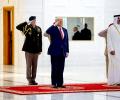
'He is intrigued by the intractability of Kashmir issue. With his interest in dealmaking and peacebrokering, he sees it as an exciting challenge to tackle.'
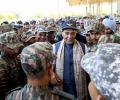
'Pakistan is no longer a front-burner issue for America.'

'Qatar has been funding and supporting terrorist organisations.' 'It has used its media to spread lies and create unrest in neighbouring countries.'
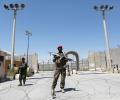
The invitation for the meeting to India was extended by Qatari special envoy for conflict resolution Mutlaq bin Majed Al-Qahtani during his visit to the national capital last week.

Regional States will be worried that the US's nascent engagement with the Taliban behind the fig leaf of humanitarian aid enables the return of US intelligence personnel to Afghanistan, observes Ambassador M K Bhadrakumar.
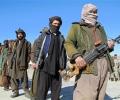
The meeting was facilitated by Pakistan's spy agency -- the ISI

'Why not ask for a change of leadership in Qatar, Bahrain or Saudi Arabia? Is there a constitution in Saudi Arabia? Are there elections in Saudi Arabia? Why no talk of democracy in these countries?' 'America said change the leader now, but is now ignoring the feelings of the Syrian moderate majority. Is that democracy,' asks H E Dr Riad Abbas, Syrian ambassador to India, in an interview to Cleo Paskal.
